What is Induction Fiber Optic Heating?
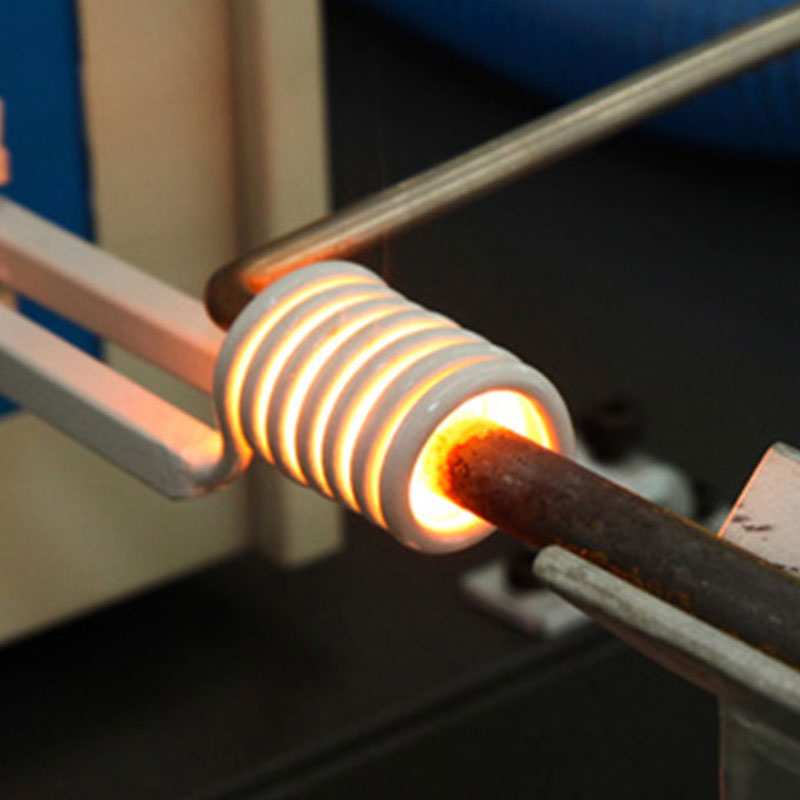
In conventional thermal poling methods, there is need for direct physical contact to internal fiber electrodes. Induction heating is an efficient, fast, precise and repeatable non-contact technique for heating metals or other electrically-conductive materials. The material may be a metal such as aluminium, brass, copper or steel or it can be a semiconductor such as silicon carbide, carbon or graphite.
For Induction Fiber Optic Heating, drawing furnaces are utilised to heat pre-formed quartz to a temperature of 2,200 °C tailed by a constant drawing process to produce fiber optics at speeds of up to and beyond approximately 4,000 ft/minute. Indirect induction heating is provided using a graphite susceptor, which allows precise control of furnace temperature. For protection of the fiber, and to prevent the graphite crucible from burning, a neutral gas atmosphere such as argon is retained in the chamber and thermal inertia is reduced to a least allowed value. The power consumed by the transistorized power supply lies generally between 25 & 50 kW at a nominal operating frequency of approximately 15 kHz.